
You Cannot Will Your Way to Felt Safety
Why understanding your pain is not enough to heal it, and what the gap is actually asking of you
You have read the books. Perhaps more than one. You have followed the accounts, listened to the podcasts, maybe even worked with a practitioner. You understand, at least on paper, that your nervous system is not broken. That pain does not equal damage. That the brain can generate real, intense, debilitating pain in the absence of structural injury, and that this is not a character flaw or a failure of resilience.
You know all of this.
And yet you woke this morning and scanned before you opened your eyes. You held your breath for the first few seconds of standing up. You felt the familiar tightening and thought: still there. Still here. Still me.
If that is where you are, I want to say something clearly before we go any further: the gap between knowing and feeling is not a sign that you are doing this wrong. It is not evidence that this approach does not work for you. It is not proof that your pain is the exception, the one case where the mind-body model simply does not apply.
It is, in fact, one of the most predictable and understandable experiences in the entire process of pain recovery.
Why understanding alone cannot shift the nervous system
When we first encounter pain science, there is often a moment of profound relief. The model makes sense. It maps onto lived experience in ways that years of medical appointments never quite managed. For many people, understanding that the nervous system can become sensitised, overprotective, locked in a pattern of alarm, is the first time their experience has felt genuinely explained.
That relief is real. And understanding is genuinely necessary. Without it, you would have no map, no framework, no reason to believe that change is possible. Knowing matters.
But knowing operates in one part of the mind. Felt safety operates somewhere else entirely.
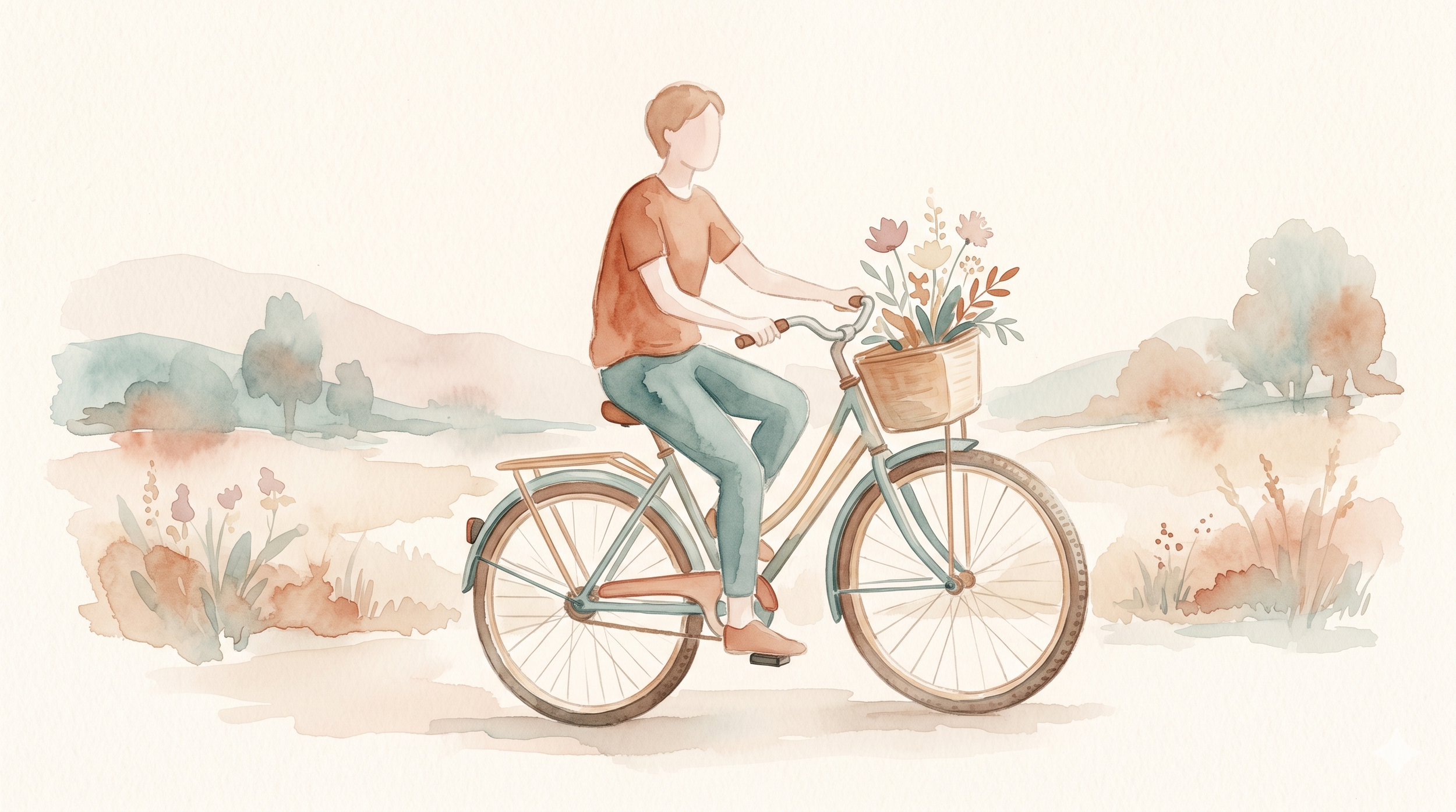
The nervous system does not update through comprehension. It updates through experience, repetition, and time. You cannot read your way into a regulated state any more than you can read a manual about cycling and then ride a bike without wobbling. The knowledge is real. The theory is sound. And yet the moment you swing your leg over the saddle, something entirely different is required of you. Something the manual cannot give.
This is not a failure of the model. It is simply the difference between understanding a process and living one.
The biology behind the gap
There is something worth knowing here that often gets left out of the conversation, and it matters because it removes a layer of self-blame that many people carry quietly.
Threat memory consolidates faster than safety memory.
The nervous system is exquisitely designed to learn danger quickly and hold onto it. This served our ancestors well. A threat remembered vividly, encoded deeply, retrieved instantly, was the difference between survival and otherwise. The brain did not need to be equally quick at learning safety. Safety could be absorbed slowly. There was time.
What this means in practice, for someone with chronic pain, is that the alarm pathways are well-worn. They have been reinforced through months or years of pain signals, fear responses, avoidance behaviours, hypervigilance, and the body bracing for the next wave. Safety pathways, by contrast, are newer and quieter. They have to be built.
So when you tell yourself that you are safe, and nothing shifts, it is not because the words are wrong. It is because you are asking a well-practised fear response to yield to a thought. The mismatch is not personal. It is biological. And it points toward something important about what the practice of recovery actually requires.
What is happening during the gap
This is the part that tends to get lost in the frustration of slow progress: the period that feels like nothing is happening is rarely the period in which nothing is happening.
Think again about learning to ride a bike. Before balance arrives, there is a long stretch of apparently getting nowhere. Falling. Correcting. Tensing. Adjusting. The body is gathering information it does not yet know how to use consciously. The nervous system is building something, quietly, in the background. The proprioceptive calibration, the micro-corrections, the beginning of a felt sense of what balance actually is, not in theory, but in the body. None of this registers as progress from the inside. And then, one day, something shifts. Not because you finally tried harder. Because enough had quietly accumulated.
Pain recovery has a similar architecture.
When you practise somatic tracking, when you move through a gentle yoga sequence while noticing sensation rather than bracing against it, when you sit with discomfort long enough to observe that it changes, that it is not fixed and constant even when it feels that way, you are building safety pathways. Slowly. Cumulatively. In ways you cannot always measure or feel in the moment.
The gap between knowing and feeling is not emptiness. It is acquisition.
Why trying harder can widen the gap
Here is something that many people discover only after a period of effortful practice: trying to feel safe can paradoxically signal to the nervous system that there is something to feel safe from.
Effort implies threat. The harder we work at convincing ourselves that we are not in danger, the more we communicate to the body that danger might be present. The very urgency of the attempt can activate the alarm system it is trying to quieten.
This is one of the more counterintuitive truths in this work. And it is why so many people find that intellectual reassurance, however well-founded, does not land in the body the way they hoped it would. They are attempting to think their way into a felt state. They are treating the gap as a problem to be solved by more understanding, when what it is actually asking for is something different.
Not effort. Conditions.
The nervous system shifts not when we try harder but when we provide the consistent, repeated experience of something other than alarm. Small moments of safety. Not manufactured, not forced, but genuinely noticed. A breath that is easier than the last one. A moment in which the pain, while present, is not the only thing in the room. A sensation that is neither good nor bad, simply there.
These are not dramatic. They are not the breakthrough moments recovery stories tend to feature. But they are what the nervous system actually learns from.
You do not get to decide when
This is the part nobody tells you, and it is also, perhaps, the most freeing thing about this entire process.
You cannot schedule the shift. You cannot earn it by accumulating enough correct practice. You do not get to decide when felt safety arrives, any more than you could have decided the exact morning your balance on the bike finally held.
What you can do is create the conditions. Consistency. Curiosity rather than urgency. Patience that is not passive resignation but active presence. A willingness to work with your experience rather than against it, to learn from what is actually happening in your body rather than measuring it against where you expected to be by now.
The knowing-feeling gap is not a wall between you and recovery. It is the territory of recovery. The place where the work actually happens, in the quiet, cumulative, unseeable ways that eventually become felt.
Understanding why your pain persists is not enough to heal it. That part was never the destination. It was always the map.
What the gap is actually asking of you is not more knowledge. It is a different relationship with the process entirely. Less acquisition. More allowing. Less trying to arrive. More being present in the territory of getting there.
That is harder than reading another book. And it is also, in my experience, the only way through.
If this resonated with you, I've created a free guide that explores all five key reasons chronic pain persists and what you can gently do about it.
📥 "5 Key Reasons Your Pain Becomes Chronic, and How to Break Free"
And if you feel the need to put your experience into words, you can also write to me via
If you're ready for personalised support on your journey, I’d love to hear from you. Feel free to reach out, and we can have a friendly chat to see if my approach is the right fit for you.
