
On the gap between understanding your pain and feeling at ease with it.
You have read the books. Perhaps more than one. You have followed the accounts, listened to the podcasts, maybe even worked with a practitioner. You understand, at least on paper, a way of thinking about pain that may have made real sense to you: that pain is complicated, that it is shaped by more than the body alone, and that how we relate to it matters.
You know all of this.
And yet you woke this morning and scanned before you opened your eyes. You held your breath for the first few seconds of standing up. You felt the familiar tightening and thought: still there. Still here. Still me.
If that is where you are, I want to say something clearly: the gap between knowing and feeling is not a sign that you are doing this wrong. I cannot tell you whether any approach will work for you, and nothing here is a verdict on your pain. But in my work it is one of the most common experiences I hear about.
Why understanding can feel like not enough
When people first meet a new way of thinking about pain, there is often a moment of relief. The ideas make sense. They map onto lived experience in ways that years of appointments never quite managed. That relief is real, and understanding matters. Without it, you may have no framework and little reason to hope.
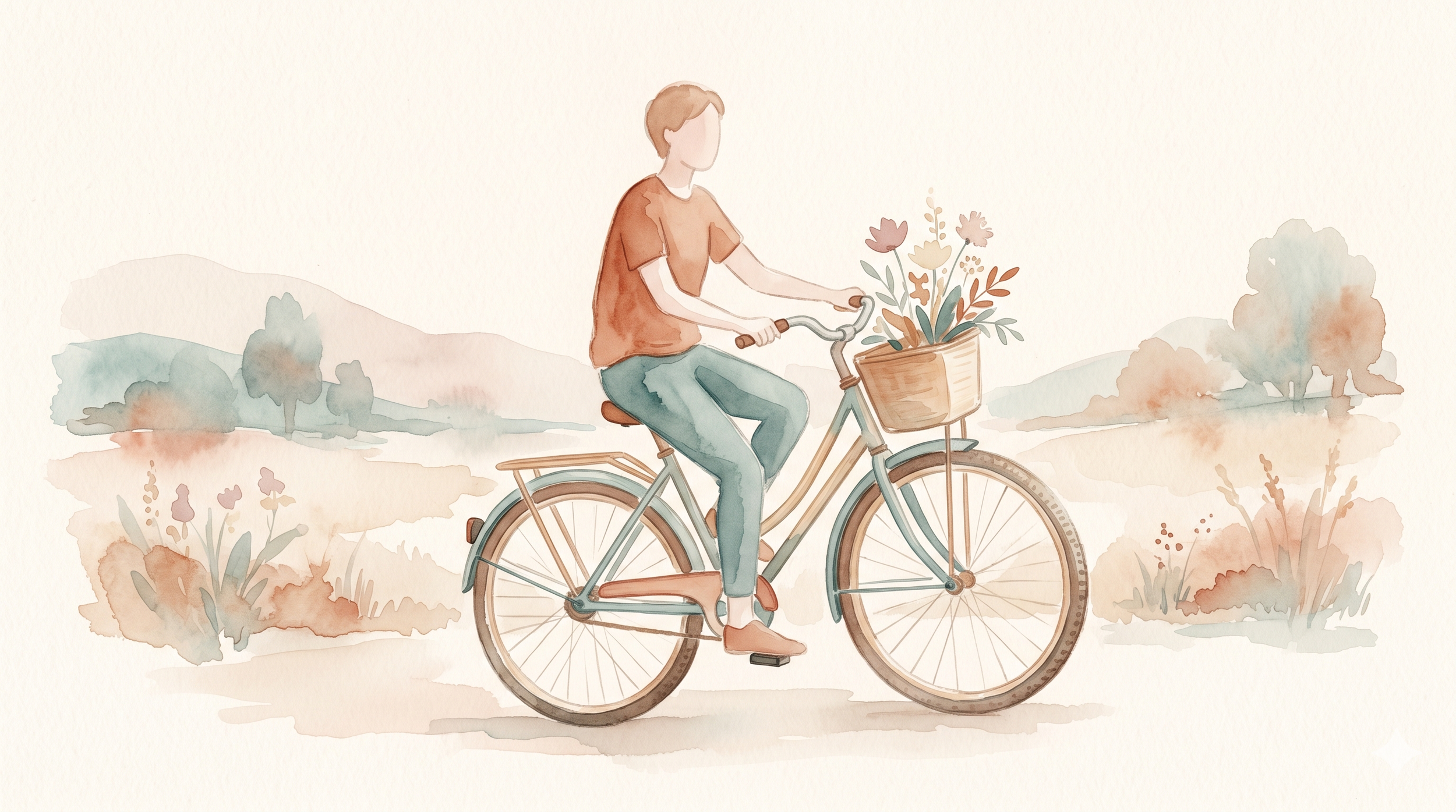
But I have noticed that knowing and feeling at ease seem to live in different places. Many people find that feeling at ease in the body does not arrive through reading or reasoning. It tends to come, if it comes, through experience, repetition and time. You cannot read a manual about cycling and then ride a bike without wobbling. The knowledge is real. And yet the moment you swing your leg over the saddle, something different is asked of you.
That is not a failure of the ideas. It is the difference between understanding a process and living one.
Why it may be so slow
I am not a scientist, and I would not want to over-explain this. What I notice is that many people have been braced for a very long time, and bracing can become a habit. Habits shift slowly. That is a way of thinking about it, not a proven explanation, and it does not apply to everyone.
If that is true for you, it may help to know that being told "you are safe" and feeling safe are different things, and that nothing is wrong with you for finding the second harder.
What may be happening in the gap
Think again about learning to ride a bike. Before balance arrives, there is a long stretch of apparently getting nowhere. Falling. Correcting. Tensing. Adjusting. And then one day something holds, not because you finally tried harder, but because enough had quietly built up.
Many people describe a stretch like this when living with pain, one that felt empty at the time and, looking back, was not. When people practise paying curious attention to sensation, or move gently while noticing rather than bracing, some find that over time it changes how they relate to what they feel. It is hard to measure, and I cannot promise it.
When trying harder can feel like pressure
Something many people discover after a period of effortful practice is that trying to feel safe can start to feel like another job. The harder we work at convincing ourselves, the more pressure we may feel, and urgency and ease often pull in opposite directions. I cannot say what is going on inside anyone's body, but I have seen this pattern often enough to mention it.
Rather than more effort, some people find it helps to notice small moments of ease. A breath that is a little easier than the last. A moment when the pain, though present, is not the only thing in the room. A sensation that is neither good nor bad, simply there. These are not dramatic, and they are not the breakthrough moments that stories tend to feature. But some people find them kinder than trying to arrive.
You do not get to decide when
This is the part nobody tells you, and it may also be the most freeing. You cannot schedule ease. You cannot earn it by piling up enough correct practice. You do not get to decide when it arrives, any more than you could decide the exact morning your balance on the bike finally held.
What you can do, if you want to, is offer yourself consistency, curiosity rather than urgency, and a patience that is not resignation but presence. A willingness to learn from what is actually happening, rather than measuring it against where you expected to be by now.
The gap between knowing and feeling may be less a wall than part of the path, though I cannot say what path yours will be.
For me, understanding was a map, not the destination. That is one person's view. What I notice is that the gap often asks for less effort and more allowing, less trying to arrive and more being present on the way there. That is harder than reading another book.
If this resonated with you, you are welcome to download my free guide, "Understanding Your Pain Differently", which shares five ideas about how the nervous system can shape pain.
A gentle note
What I share here is general information. It does not replace medical advice or therapy, and reading it does not create a therapist-client relationship. If your pain is new, changing or worrying you, please speak to your GP.
If you would like to know more about how I work, you are welcome to get in touch. A short introductory call is a chance to ask questions. It is not a therapy session or an assessment.
